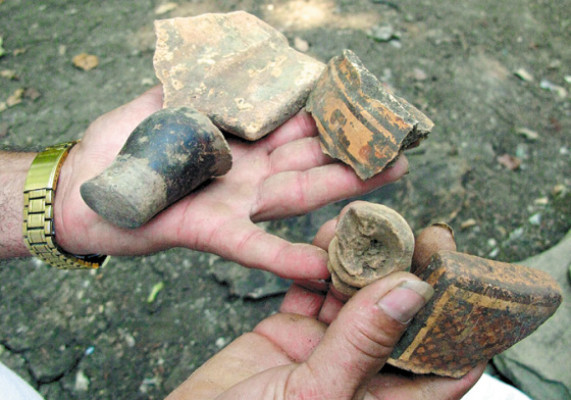
La Campa, Lempira and Intibucá
Lenca pottery
The Lenca people of western Honduras have shaped clay by hand for generations. Much of it is still made without a wheel, built up coil by coil, polished with a smooth stone, and fired low.
Look for warm reds, earthy browns, and creamy white slip painted in simple lines. Pots, comales, little figures, and candle holders are the classics. La Campa is the village most people think of first.
For me this one is personal. We used to find old Lenca pieces right on our property, broken bits of a story much older than any of us.
Santa Bárbara
Woven junco
Junco is a reed that grows in the Santa Bárbara area. Families dry it, split it, and weave it into hats, baskets, purses, and mats.
A good junco hat feels light but holds its shape. The weave is tight and even, and you can see it was done by hand because no two are quite the same.
Valle de Ángeles and beyond
Hand carved wood
Honduras has a long tradition of carving in cedar and mahogany: boxes, bowls, spoons, wall pieces, and little scenes of village life.
Valle de Ángeles, a hill town near Tegucigalpa, is known for its craft market. Real carved pieces show tool marks and the natural grain of the wood. That is a feature, not a flaw.
Intibucá and the western highlands
Handwoven textiles
Lenca women are known for bright woven cloth and the colorful head scarves you still see in La Esperanza. Embroidered table runners, bags, and blankets show up too.
Real handwoven cloth has tiny irregularities in the weave, and the colors sit deep in the thread instead of being printed on top.
How to tell it's the real thing
- Small differences between pieces. Handmade is never perfectly identical.
- The seller names a town or region, not just "Central America."
- Natural materials: clay, junco, cedar, cotton.
- Vintage pieces on eBay often come with a story. Ask for it.